The Recurring Campaign
Why Physical Marketing Keeps Hitting the Same Problems

Every marketing team has a version of the same story. The stand arrived in three pieces with no instructions. The merchandise sat in customs for a week while the event came and went. The warehouse contained six pallets of branded items from a campaign two years ago that nobody had accounted for. The campaign worked in London and fell apart in Singapore.
These are not isolated incidents. They are the standard failure modes of physical marketing - appearing in the same sequence, in the same types of organisation, at the same points in the campaign cycle. They have been doing so for decades. This article looks at why, and what it takes to make them stop.
What is the recurring campaign problem?
The recurring campaign problem is what happens when physical marketing is executed without the operational infrastructure it requires. Unlike digital campaigns - which run on platforms designed to track, measure and iterate in real time - physical marketing typically runs on relationships, spreadsheets and the institutional memory of whichever team member has done it before.
When that person leaves, or the campaign scales beyond what informal coordination can handle, the same problems appear. Briefs go dark after sign-off. Inventory accumulates without visibility. Suppliers deliver their piece of the chain without anyone owning the whole. The result is a set of entirely predictable failures that most teams still treat as bad luck.

Why it happens
Three reasons explain why the same problems keep recurring across different organisations, markets and campaign types.
No visibility once the brief leaves. The moment a campaign asset moves from approved brief to external production, most teams stop being able to see it. There is no dashboard, no milestone notification, no early warning when a deadline is at risk. The first signal that something has gone wrong is usually the silence on the day it was supposed to arrive.
Logistics is treated as someone else's department. Physical marketing production and delivery is routinely managed by people whose primary job is marketing, not logistics. The nuances of customs documentation, international lead times and freight routing are treated as administrative details to be handled by a supplier rather than as campaign-critical decisions that need to be made at the brief stage.
The supplier model fragments accountability. When print, merchandise, warehousing and delivery are managed through separate vendors, each supplier owns their segment and nobody owns the handoff. The coordination overhead lands on the marketing team. When something slips between suppliers - and it reliably does - nobody has a complete enough view of the chain to catch it before it matters.
The operational infrastructure model
The answer to the recurring campaign problem is not a better checklist. It is a shift in how physical marketing is structured operationally - from a series of supplier relationships to an integrated logistics model where visibility, accountability and institutional knowledge are built in from the start.
The four components of that model are:
a control tower that tracks every job from brief to doormat;
in-market knowledge that takes the unpredictability out of customs and international delivery;
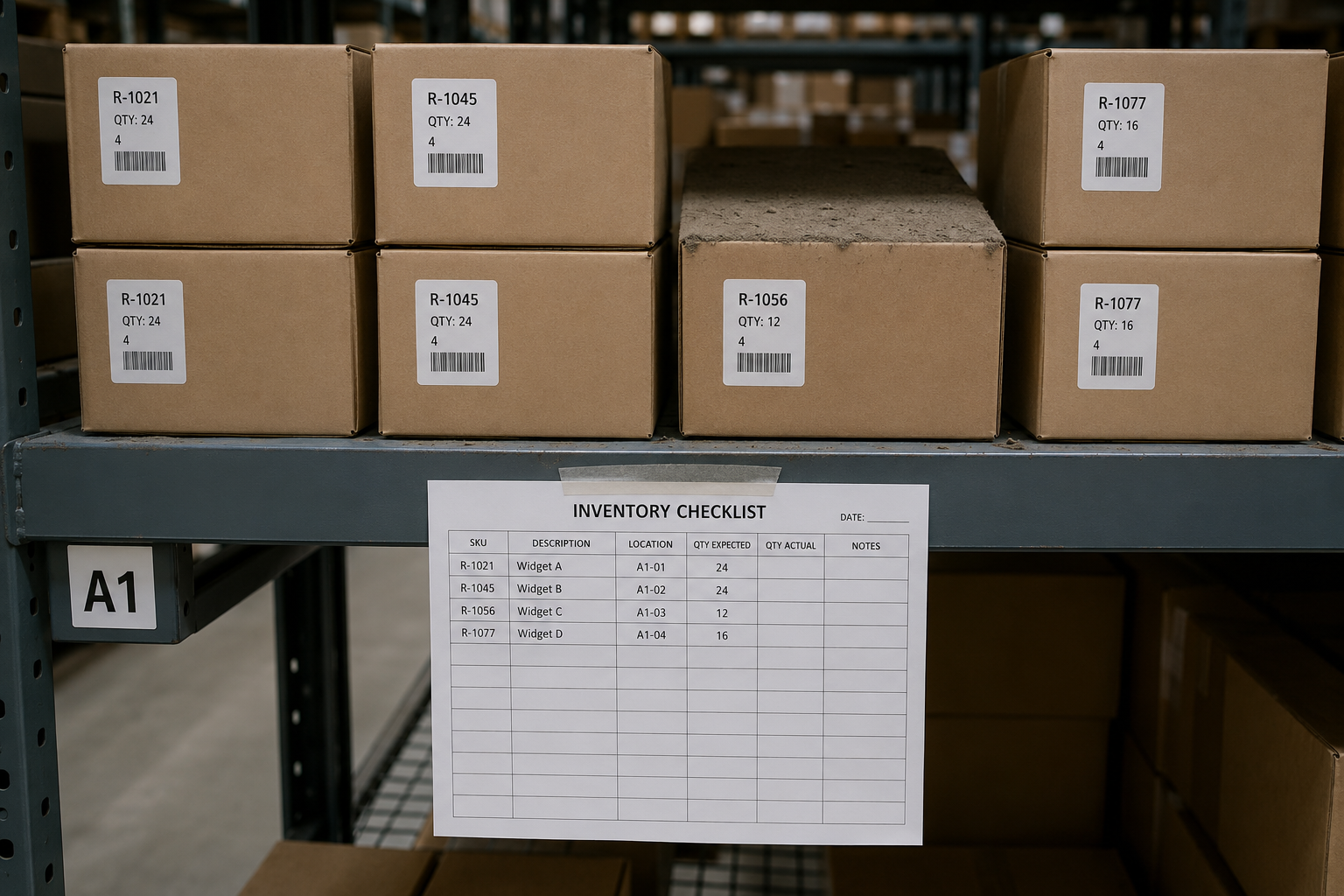
inventory management that connects the warehouse to campaign planning rather than treating them as separate systems;
a single accountable team that owns the entire chain, eliminating the handoff failures that fragmented supplier models create.
Each component addresses one of the recurring failure modes. Together, they do not prevent problems so much as make them structurally improbable.
Building in contingency
Even within a well-designed operational model, physical marketing carries inherent uncertainty. Event dates do not move. Venues have fixed loading windows. Audiences do not wait. The margin for recovery is narrow.
Contingency is not a buffer added at the end - it is designed into the process from the beginning. That means calculating lead times from the event date backwards, not forwards from when the brief was approved. It means knowing, before the job starts, which elements carry the most customs or production risk and building extra time around those specifically. And it means having a logistics partner whose first question is not "when do you need it?" but "what could go wrong between now and then?"
The practical fix
Two habits change the outcome for most teams.
Plan backwards from the hard deadline. Take the event date, the campaign launch, the doormat delivery window - and work backwards from there to set every production and logistics milestone. The brief approval date is not the start of the timeline. The delivery date is the anchor, and everything works back from it.
Name a single owner for every stage. Brief to production. Production to warehouse. Warehouse to dispatch. Dispatch to delivery. Each handoff needs one person or one team responsible for it - not collectively, but specifically. The moment a stage is unowned, it is at risk.
These are not complex changes. They require discipline and, ideally, a logistics partner who runs this way as standard rather than requiring the marketing team to build it themselves.

The problems are not going away. The exposure does not have to be permanent.
Physical marketing will always carry more operational complexity than its digital equivalent. But that complexity is manageable - not eventually, not with a major transformation programme, but now, with the right operational model in place. The failure modes have not changed in 25 years. The infrastructure to prevent them has.
Read more about how MyMedia approaches Marketing Logistics.