How Marketers Can Plan Smarter Shipping in 2026 (And Protect Every Campaign)
Most campaign headaches start long before a box ships.
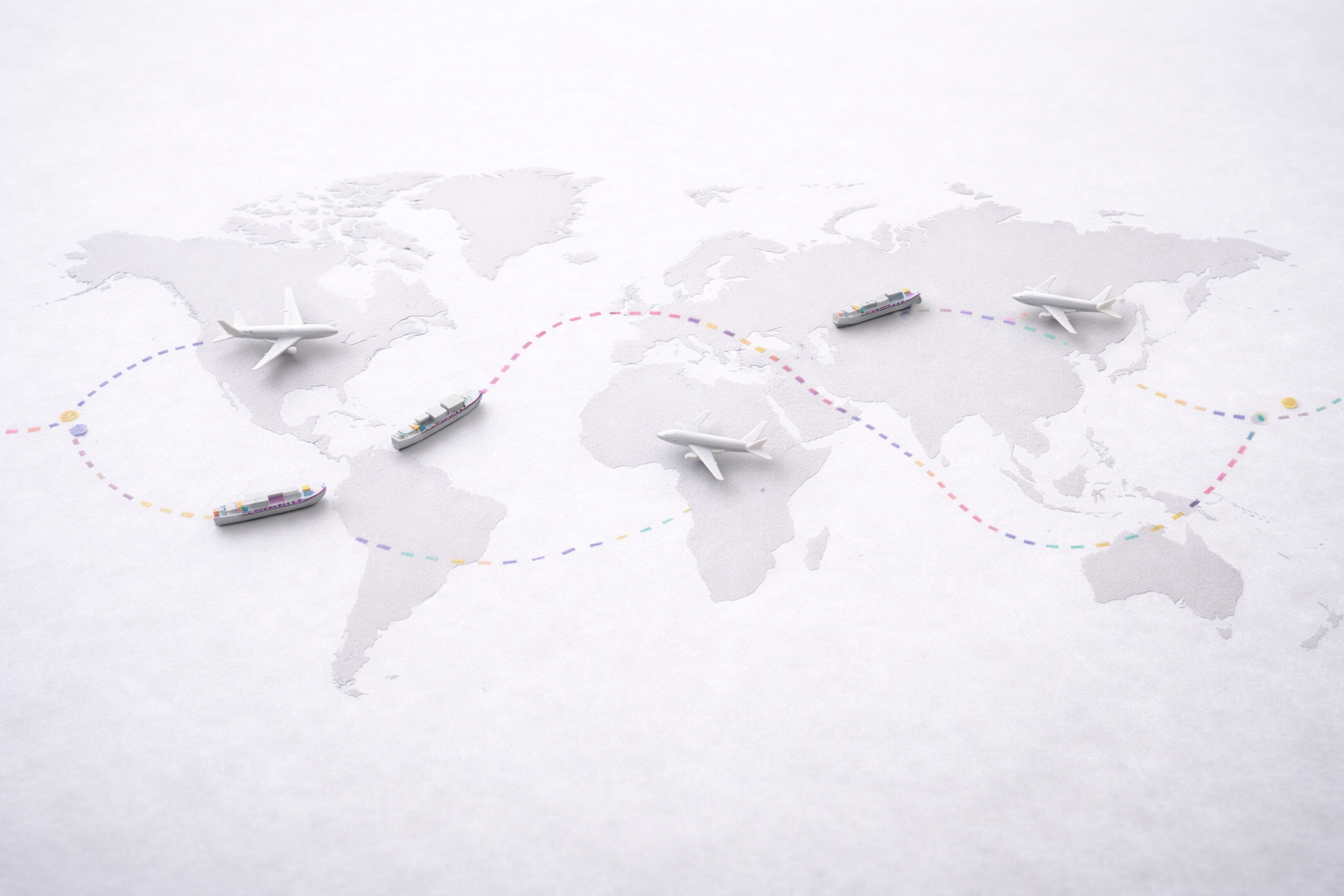
In 2026, blown campaign budgets, missed launch windows, and last-minute scrambles often trace back to one decision made too late: the shipping route and mode chosen at the planning stage. The “best” option is rarely the cheapest quote or the fastest ETA. It is the one that holds up when real-world friction arrives: missed connections, port delays, congestion, and capacity crunches - none of which care about your go-live date.
This article gives marketers a practical way to choose shipping routes that are more reliable and lower drama by planning backwards from the campaign, event, or launch date, then applying one simple trade-off lens: Cost / Time / Reliability / Risk / Carbon.
The hidden logistics journey behind every campaign send
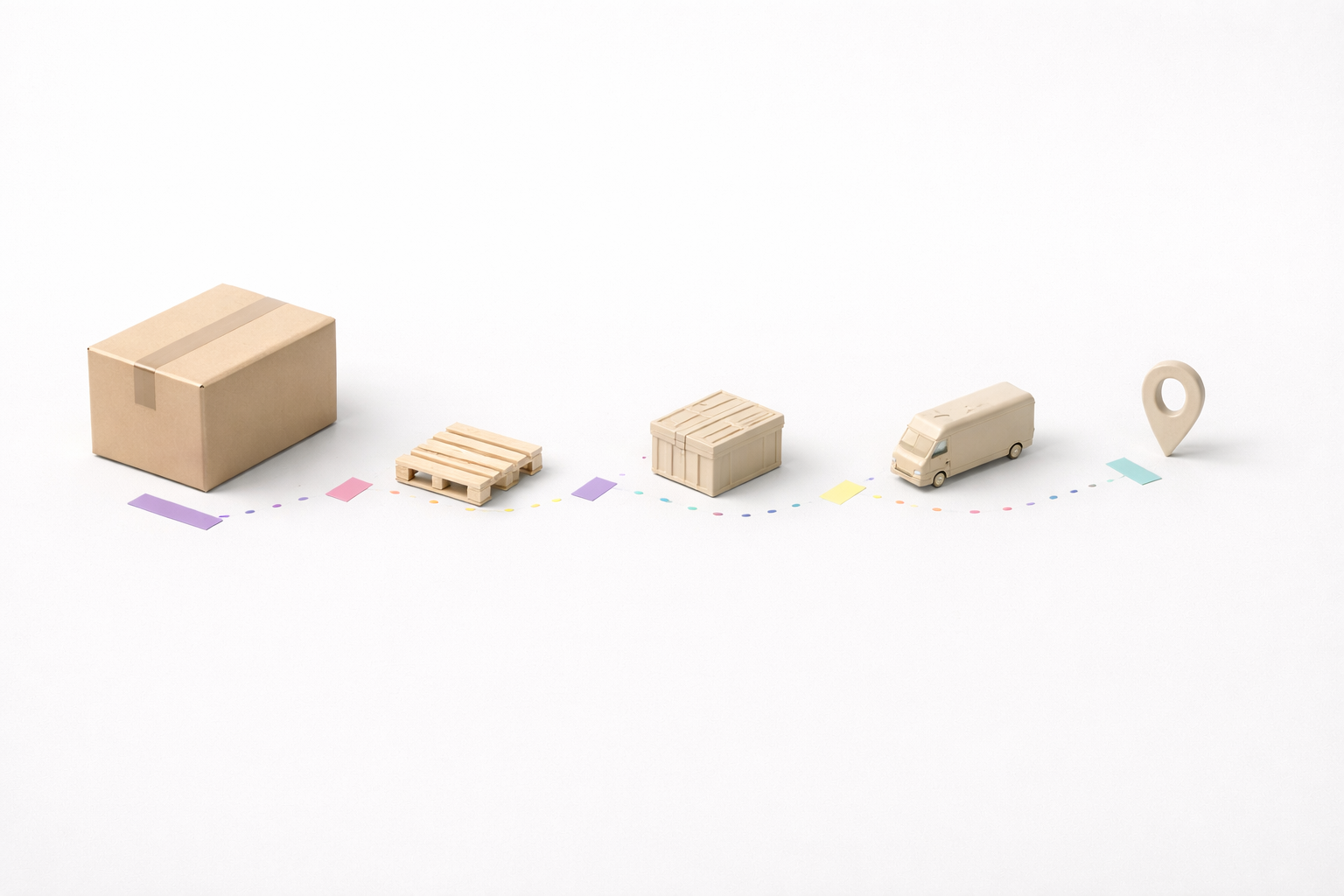
When marketers say “the route,” they often picture one clean line on a map. In reality, every shipment moves through multiple multiple stages - and each one is a potential point of failure:
Origin pickup → export handling → main leg → import handling → final mile delivery.
And many shipments do not travel point to point. They “hop” through hubs and transshipment points, where a single slipped connection can unravel an entire campaign timeline. This is why two routes with the same quoted transit time can behave very differently under real conditions.
Why planning backwards changes everything
Forward planning (the way most teams default) sounds like this:
“We need this shipped. What’s the fastest or cheapest way to get it there?”
Backward planning - the smarter approach for marketers - sounds like this:
“We need this in-market by this date. What decisions must be locked, and by when, to make that outcome realistic?”
Backward planning forces you to include the details most marketing teams forget until it’s too late: booking cutoffs, carrier schedules, customs lead time, handling windows, and buffer time. It turns vague intent into a concrete decision chain - and makes trade-offs visible before they become crises.

The 2026 route decision framework for marketers
Shipping decisions involve real trade-offs. Use this 5-part lens to compare options and choose the route that best protects your campaign:
Cost
Not just freight charges. Think about what a delay actually costs: emergency re-orders, reprinted collateral, missed event windows, and the reputational hit of showing up late - or not at all.Time
Map the full journey, not just “in transit.” Factor in export and import time, dwell time risk, and last-mile complexity. As a marketer, your job is to protect the outcome. A route that looks fast on paper can still miss your launch date.Reliability
Ask: how likely is this plan to survive real-world conditions? Fewer handoffs and connections mean fewer failure points - and more peace of mind for your team.Risk
Map where the plan can break. For marketers, the highest-risk moments are missed transship connections, blank sailings, and customs holds - all of which can quietly kill a launch timeline.Carbon
Sustainability is increasingly a brand consideration, not just an operational one. Air is fast but emissions-heavy and volatile. Sea is often the lower-footprint option - if you plan early enough. The route you choose is also a reflection of the commitments your brand has made.
The goal is not to “win” every category. The goal is to choose the best balance for your campaign, before the calendar forces a bad one.
A simple step-by-step process for marketing teams: plan backwards, then pick the path
Step 1: Start with the required delivery date
Write the campaign delivery date and destination at the top of your brief. This is your anchor. Everything else works backwards from here.
Step 2: Build a timeline with buffers
Add the non-negotiables - these are the time blocks that must fit for the plan to be realistic:
Event or activation date, venue receiving hours, and any check-in requirements
Time for final mile delivery and check-in
Import and customs clearance lead time
Main-leg transit time (sea or air)
Export handling and origin pickup time
Buffer time for disruption, especially during peak periods
A route that “fits” only works if everything goes perfectly is not a plan. It is a gamble with your campaign.
Step 3: Identify decision checkpoints
These are the dates that determine whether your campaign shipment will land on time. Confirm them early and share them with your logistics partner:
Production ready date
Booking cutoff
Sail or flight windows
Customs documentation readiness
Once you see these checkpoints, you can decide if your plan is realistic or if you need an alternate.
Step 4: Compare 2 to 3 route options using the trade-off lens
Resist the urge to compare every possible route. Choose the two or three most realistic options and score each one across:
Cost / Time / Reliability / Risk / Carbon.
Step 5: Choose the option that protects the outcome
In 2026, the right route for marketers is the one that protects the outcome you care about most - on-time delivery, budget ceiling, lower emissions, or reduced risk - not the one that looks cleanest in a logistics tool.

Practical checklist: “Route choice ready” in 15 minutes
Use this before your team approves a shipping route - it takes about 15 minutes and can save weeks of scrambling:
Campaign or event delivery date confirmed, including receiving hours and any venue requirements
Full route mapped (pickup, export, main leg, import, final mile)
Number of handoffs identified (hubs, transship points, last-mile transfers)
Two alternate routings listed (in case the primary option fails)
Buffers added (do not build a plan that only works in perfect conditions)
Decision checkpoints dated (booking cutoff, sail or flight window, document readiness)
Trade-off lens applied (Cost, Time, Reliability, Risk, Carbon)
One practical tip: build a simple shared tracker with these checkpoints and update it the moment production or creative timelines shift. Shipping route decisions are not made once - they are a chain of aligned decisions that must stay current as your campaign evolves.
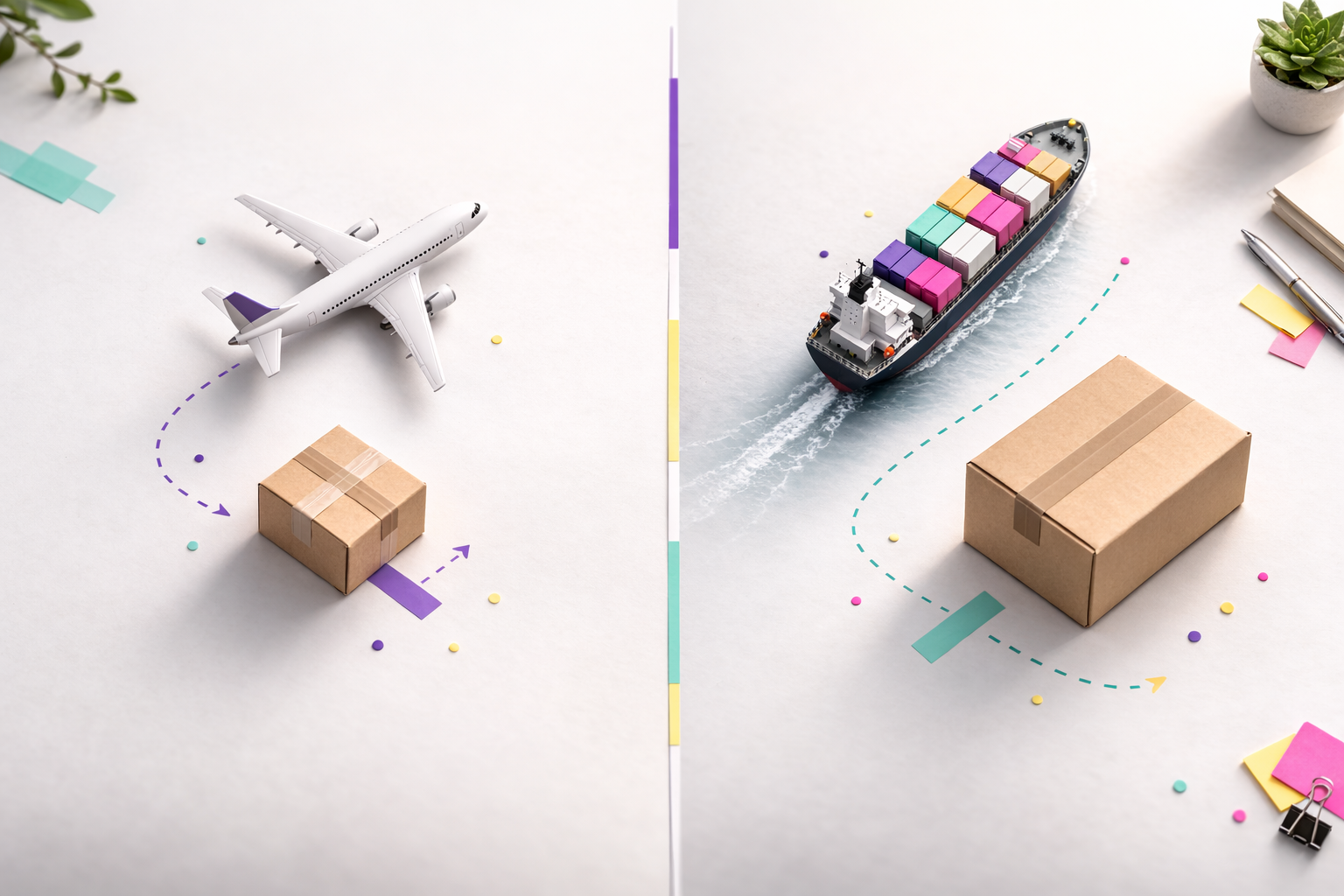
A quick example: choosing air vs sea without regret
Scenario: You have branded kits that must arrive for a brand activation. The event date is fixed and non-negotiable. Production finishes later than planned.
Option A: Air
Pros: fastest timeline, highest chance of meeting the date if booked immediately
Cons: higher cost, higher emissions, still exposed to capacity volatility
Option B: Sea
Pros: lower cost, often lower footprint when planned early
Cons: schedule fragility during congestion, higher risk of missing the event window if buffers are thin
For marketing teams, the lesson is this: if your backward plan reveals you have no buffer left, air may be the responsible choice even if it blows the freight budget. The key is to make that call early, not after the calendar forces you into an expensive, brand-damaging scramble.
The takeaway
In 2026, getting your campaign materials to the right place at the right time is not luck. It is better routing decisions made early, using a clear trade-off framework and planning backwards from the campaign date. Marketers who own this process - rather than leaving it entirely to logistics teams - protect their timelines and their brand.
Want the marketer’s version of this planning framework?