What is ghost inventory?
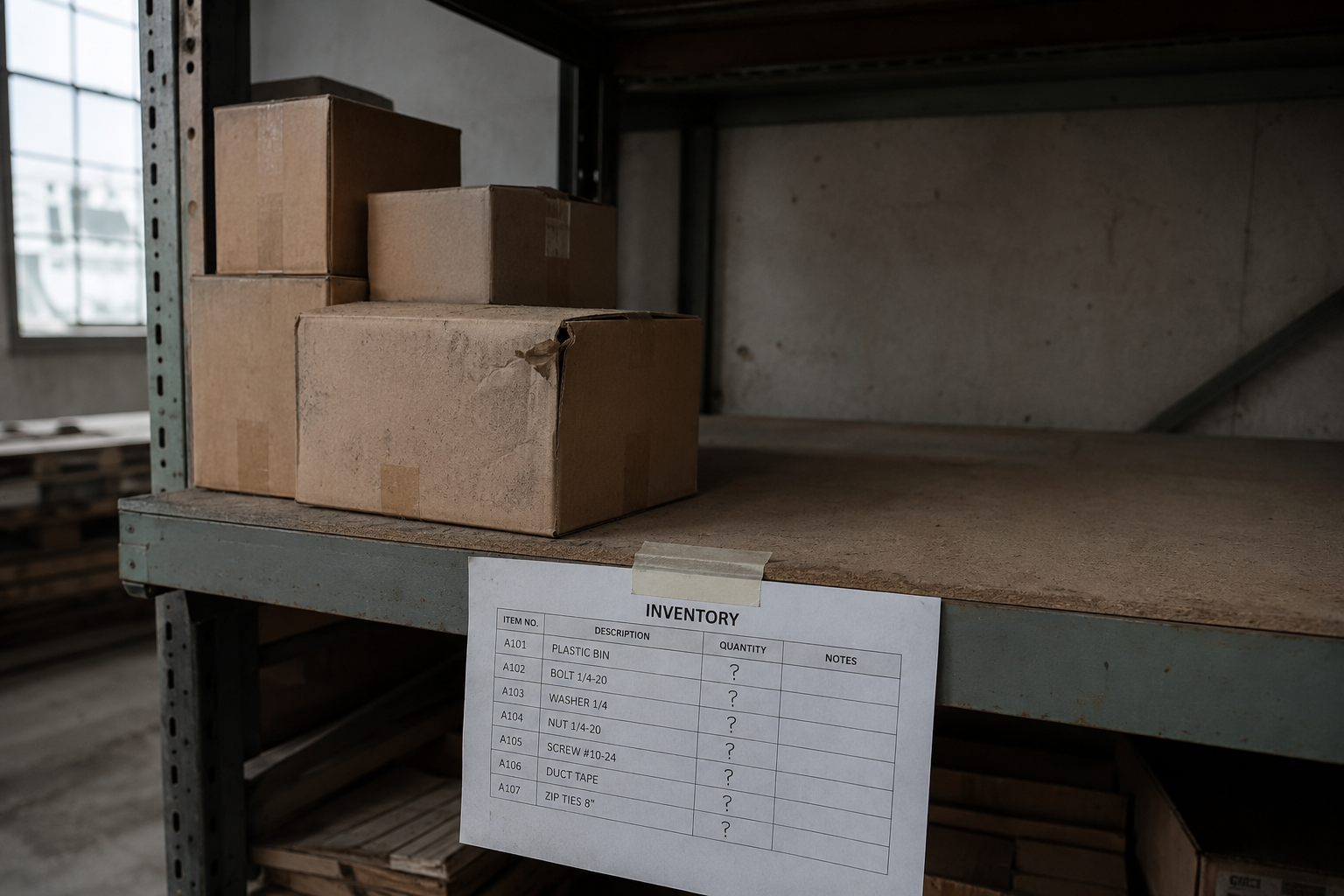
Ask a marketing team how much branded stock they are currently holding and watch the pause. Most will guess. Some will need to check three different spreadsheets. A few will admit, honestly, that they have no idea. That gap is not a filing problem. It is a budget problem hiding in plain sight, and it is more common than most procurement reviews would like to admit. This article looks at why marketing stock goes dark, what it actually costs, and what closes the gap for good.
What is ghost inventory?
Ghost inventory is what happens when branded materials - merchandise, print, event kits, signage - are produced and shipped for a campaign, then left with no owner, no location record and no plan once the campaign ends. The materials do not disappear. They simply stop being visible to anyone who could use, move or retire them. Left long enough, that invisible stock becomes indistinguishable from waste, even though every item on the pallet was paid for in full.
Why it happens
Ownership ends with the campaign. Most marketing operations assign a clear owner to a campaign while it is live, then release that ownership the moment it wraps. Nobody is left responsible for what happens to the physical leftovers, so they default to sitting exactly where they were unloaded.
Systems track orders, not locations. Procurement and finance systems are built to record what was purchased. Very few are built to record where that purchase currently sits, in what condition, or whether it is still fit for use. The order history is complete. The physical trail goes cold.
Reordering feels safer than checking. When a new campaign needs branded materials fast, checking existing stock takes time and often turns up nothing useful anyway, since nobody has kept the record current. Ordering fresh feels like the lower-risk option, even when it means paying twice for the same thing.

The visibility framework
Closing the ghost inventory does not require a bigger team. It requires OnDemand, the control tower for physical marketing, doing four things well - all visible in one place rather than scattered across spreadsheets and inboxes.
The first is a live quantity record - what exists, by SKU, updated automatically as stock moves rather than reviewed once a year. The second is a physical location down to the shelf, not a regional guess. The third is a condition and age flag, so nothing gets shipped to a launch unfit to use. The fourth is a named owner for the reuse, donation or retirement decision, so stock does not sit by default simply because nobody has been asked to make a call.
Building in contingency
Even with a strong system, stock visibility breaks down at the edges - a campaign that runs over, a regional team that orders locally without checking central inventory, a rebrand that makes existing materials obsolete overnight. Building in contingency means setting a review trigger, not just a system. A quarterly stock audit, a rule that any order above a set value requires an inventory check first, and a clear retirement path for materials that no longer match current branding all keep the system honest even when a campaign moves faster than the process.

The practical fix
Two habits change this more than any software purchase. The first is planning backwards from the reuse decision, not just the launch date - deciding at the point of production what happens to leftover stock, rather than leaving that question for whoever finds the pallet later. The second is naming a single owner for inventory the same way a campaign gets a single owner. Without a name attached to the decision, dark stock is not a risk. It is a certainty.
Conclusion
Dark stock is not a warehouse failure. It is a visibility failure, and visibility is a solvable problem once someone decides to solve it. MyMedia has spent close to 25 years building the quality-controlled check-in and check-out systems that make this possible. The pallet does not need to disappear on its own. It needs a system that knows it is there before someone else has to go looking.
See how real-time inventory visibility works in practice.