The Last Mile Problem
How to Build an Event Logistics Chain That Actually Holds
There is a specific kind of dread that event marketers know well. It is the moment, hours before doors open, when someone asks where the branded materials are and no one has a confident answer.
The shipment was supposed to arrive yesterday. Tracking says delivered. The venue says nothing came. And the clock is moving.
This is the Last Mile Problem: the final leg of event logistics, where carefully planned campaigns quietly fall apart. Not because teams are careless, but because the chain between production and venue is longer, and more fragile, than it looks on paper.
What Is the Last Mile Problem?
The term comes from supply chain management, where the "last mile" describes the final step of a delivery journey. It is consistently the most expensive, most time-consuming, and most failure-prone part of any logistics operation.
For event marketers, the last mile is everything that happens between "the materials left the warehouse" and "they are set up at the venue, verified, and ready." It is the part of logistics that gets the least attention and causes the most problems.

Why Event Logistics Chains Break
The handoff problem
Most delivery failures do not happen in transit. They happen at the moments when responsibility changes hands - from production to warehousing, from warehouse to courier, from courier to venue staff.
In most marketing teams, nobody owns the end-to-end journey. Marketing ordered the materials. Operations handled shipping. A third-party agency is managing the venue. When something goes wrong, everyone points somewhere else.
The information problem
Venues are complicated. Loading docks have specific windows. Event coordinators change. A carrier marking a delivery "complete" does not mean anyone at the event has seen it.
A delivery marked complete is not the same as materials confirmed received.
The timeline problem
Event materials are almost always produced under pressure. By the time materials are ready to ship, there is no buffer left. A one-day delay at any point in the chain becomes a crisis.

The Four Links in the Chain
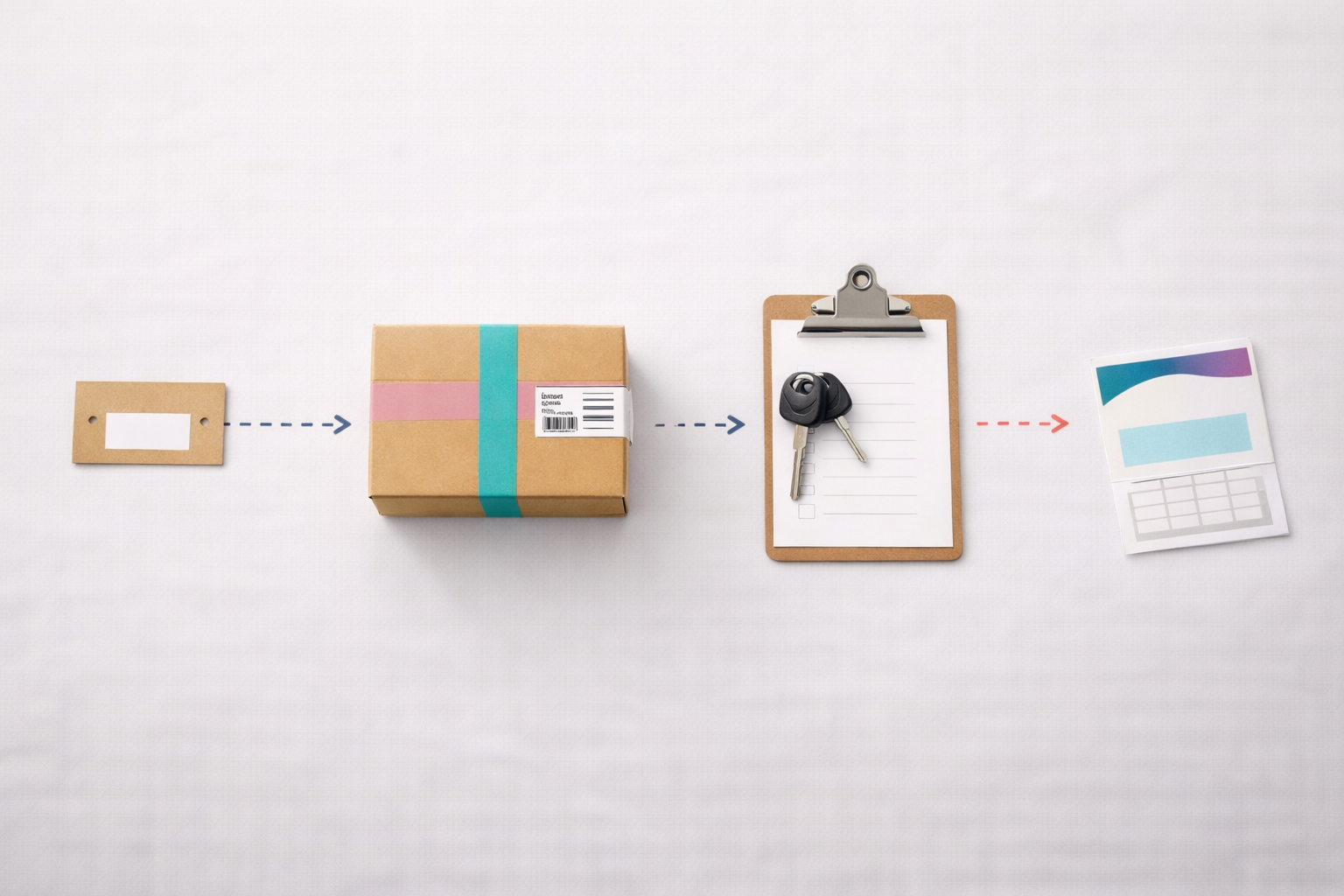
A reliable event logistics chain has four distinct stages. Each one needs a named owner, a clear output, and a handoff confirmation before the next stage starts.
Link 1: Production and pre-shipment
The most common failure here is dispatching without a proper quality check. Problems that could have been fixed in production become expensive on-site emergencies.
Link 2: Warehousing and dispatch
The biggest risk here is assumed dispatch. The job was supposed to leave on Tuesday. Nobody confirmed it actually did.
Link 3: Transit and carrier management
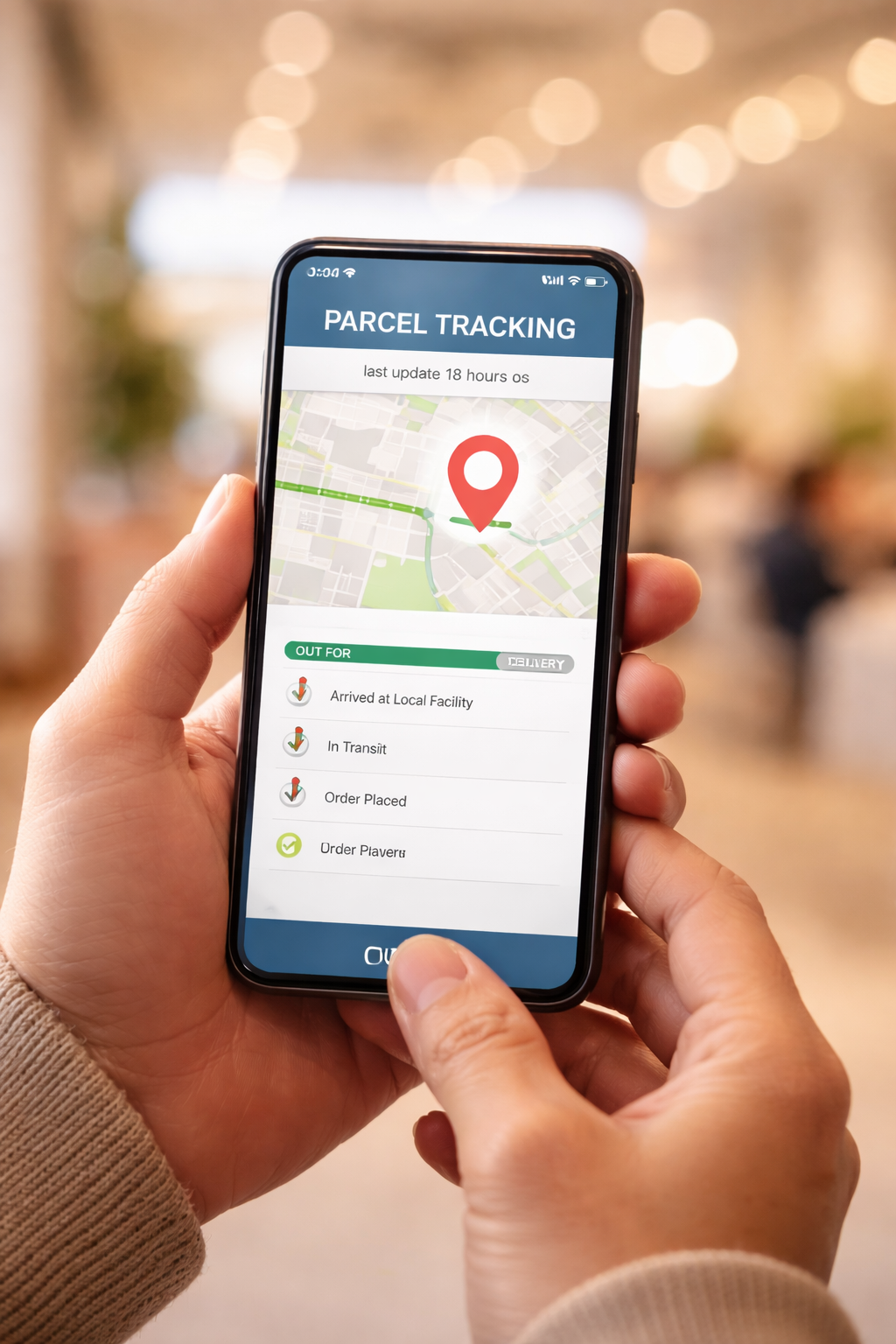
Tracking is not a passive activity. Someone needs to be actively watching it, especially in the 48 hours before an event. Problems that surface early can usually be solved. Problems that surface the morning of an event usually cannot.
Link 4: Last-mile delivery and on-site receipt
This is where most failures happen. A delivery marked complete by the carrier is not the same as materials confirmed received and checked by the event team.
Building In Contingency
Every event logistics plan should include a clear answer to this question: if the primary shipment fails, what happens next?
Contingency planning is not pessimism. It is what separates teams that recover quickly from teams that spend the event firefighting.
The Practical Fix: Plan Backwards, Name Owners
Two habits change outcomes in event logistics more than anything else.
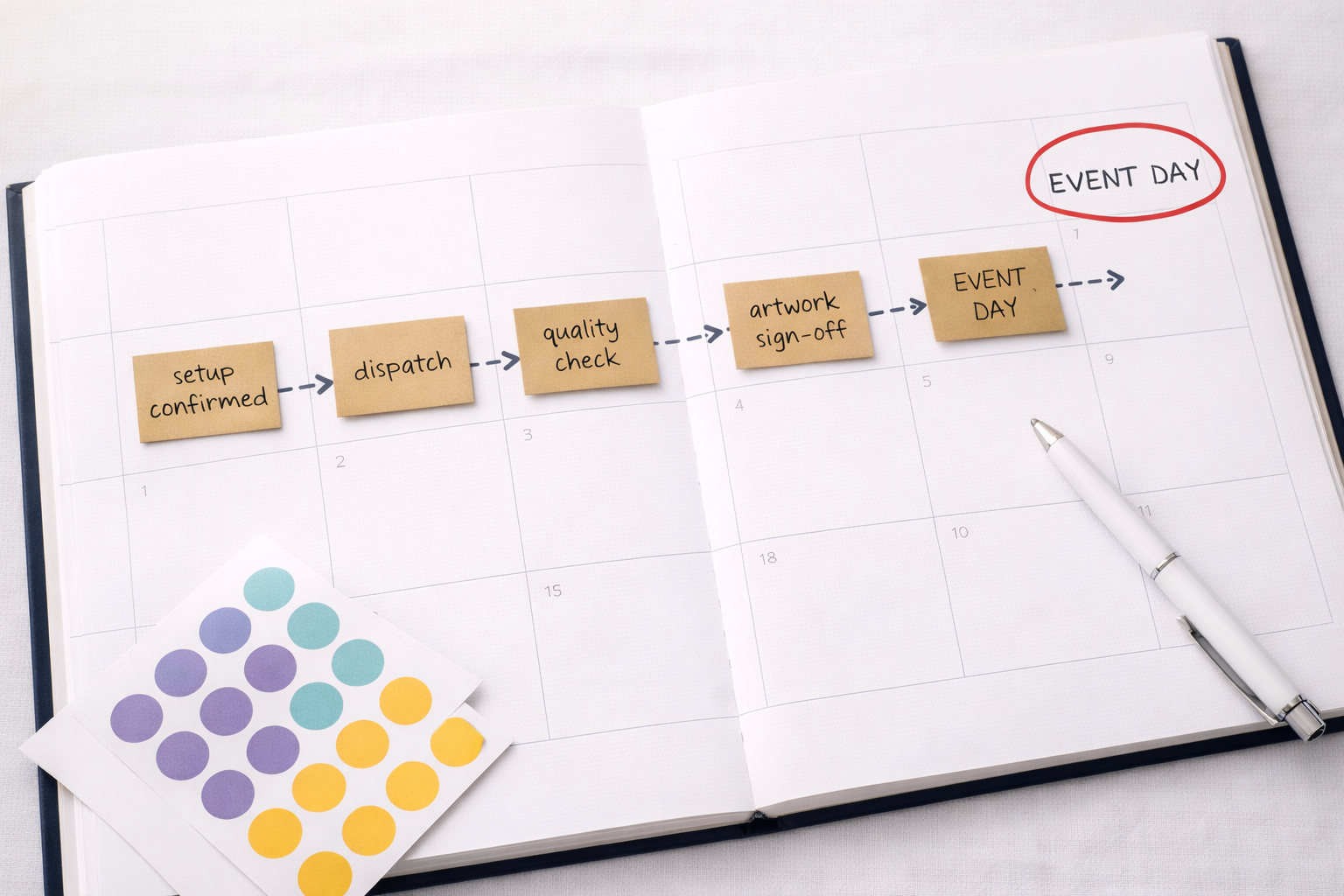
The first is planning backwards from the event date. Most teams find, when they do this honestly, that their timelines have no real buffer built in.
The second is naming an owner for each link in the chain. Not a team. Not a department. A person. Shared responsibility means nobody is responsible.
Conclusion
The Last Mile Problem is not a shipping problem. It is a planning and accountability problem. The good news is that it is entirely solvable - with the right chain, the right owners, and a contingency plan that exists before anything goes wrong.
Build the chain properly and your events run the way they were supposed to. Build it reactively and you will keep having the same conversation in the parking lot outside a venue at 7am.
Your next event is a good place to start.