The Booth Isn't Ready
And the Show Is Tomorrow
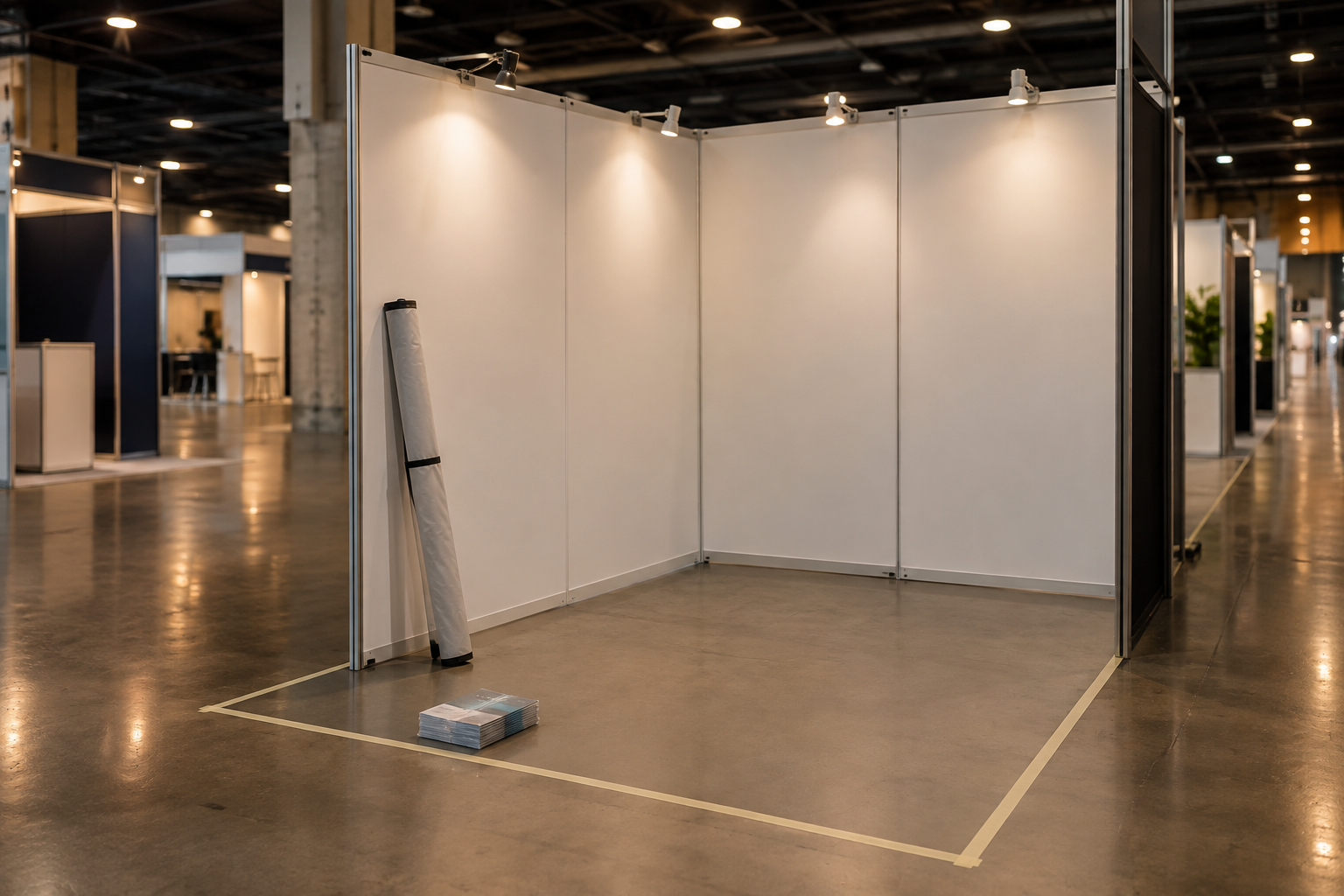
You know the moment. It's the week of the show. The flights are booked, the floor space has been paid for since forever, and someone in the office is asking the question nobody wants to hear: "Wait… where's the booth?"
Nobody plans for it to go this way. Most events teams are organised and really good at what they do. Even people who've been exhibiting for years will admit they still end up frantic more often than they'd like. So why is the booth so often the last thing ready?
That's what this article is about: why it keeps happening, where the time actually goes, and a few simple changes that make the week before a show feel calm instead of chaotic.
What is the booking-to-build gap?
Here's the short version. The booking-to-build gap is the time between confirming a show and telling the people who make its materials. In theory, it should be zero. In real life, it quietly eats most of your prep time.
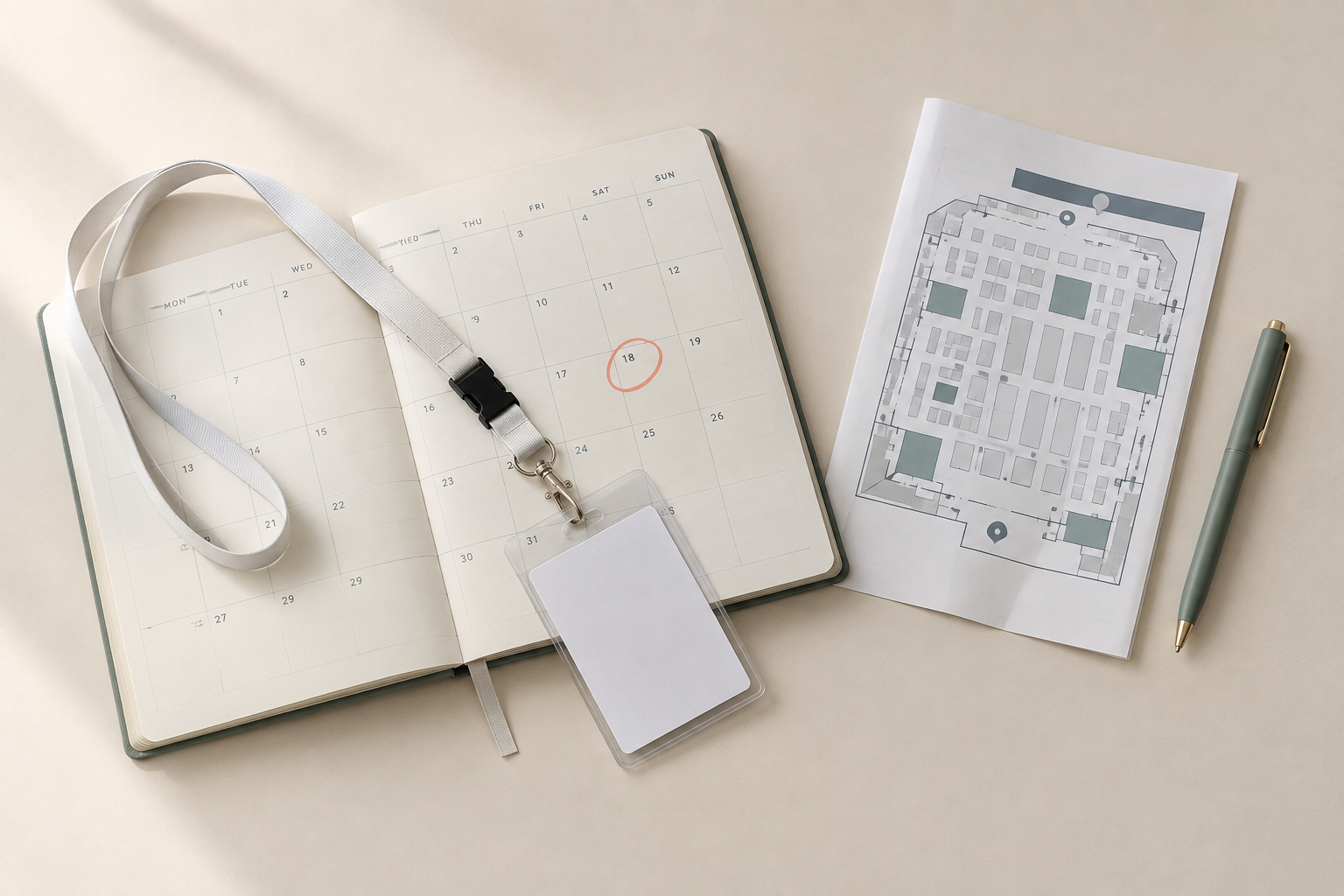
Think about how it usually works. The show goes into one calendar when it's booked. The people who print your stand graphics, source your branded merch and pack your event kits work from a different one. Until someone connects the two, nothing's being made, but the clock is already ticking.
So this isn't really a design problem or a courier problem. It's a Marketing Logistics problem. The artwork can be finished and the courier can be quick, but if logistics is the last to hear about the show, every deadline after that starts late.
Why it happens
Ever wondered how a show that's been booked for months still ends up rushed? It usually comes down to one of these.
The stand has a deadline. The build doesn't. Floor space comes with an invoice and a closing date set by the organiser, so it gets done early. The kit list, the artwork and the shipping plan are internal jobs with no date attached. And jobs with no date get pushed back, week after week.
The person who books isn't the person who builds. In plenty of companies, the stand is booked by sales or operations, not marketing. The exhibitor manual, with every delivery window and cut-off in it, lands in their inbox and waits there. By the time it reaches whoever makes the booth materials, half the runway has gone.
Nobody owns the handoff. Everyone assumes someone else has passed the details on. And when nobody owns it, it happens late, or not at all.
The runway checklist
The good news? You don't need a new team or a new tool to fix this. You just need to make a few decisions earlier, in the right order.
Put the dates next to the deposit. The day the stand is approved, add the build dates to the same file as the booth deposit: kit list, artwork sign-off, shipping, delivery to the venue. Not a big plan. Just dates and a name next to each one.
Pick one person to own the kit. Even if sales booked the stand, one person should own getting the materials there. They sign off the kit list, the artwork and the delivery address. No more "I thought you'd sent it."
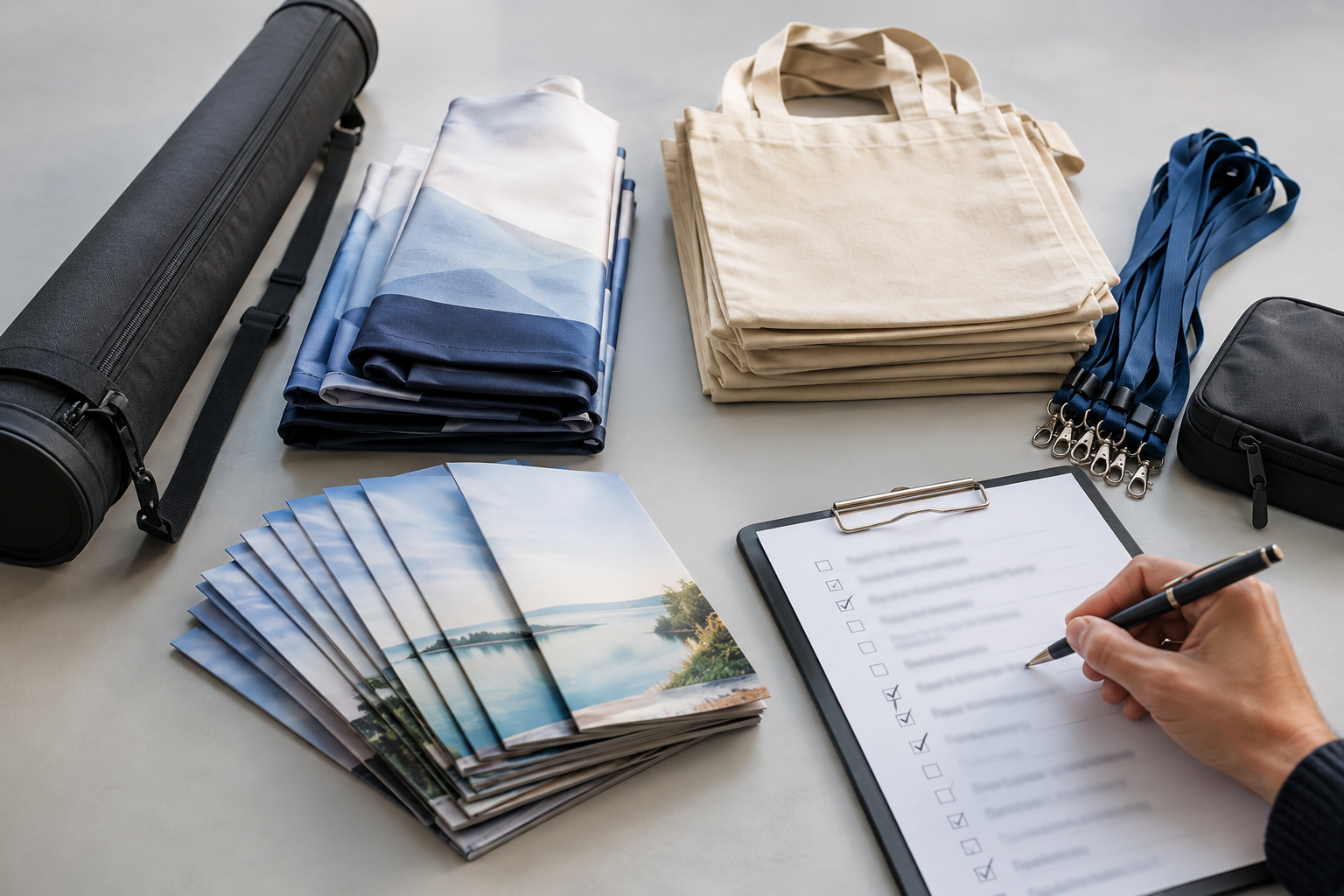
Check it as one kit, early. It's tempting to approve each piece on its own: the banner here, the stand graphics there, the branded merch somewhere else. But the gaps between pieces are exactly where things go missing. Pull everything together and check the whole kit before it ships.
Track it to the venue. With proper tracking, you know the kit has arrived, complete and ready, before anyone lands. No guessing, and no frantic calls to the loading dock.
Building in contingency
Let's be real: even well-planned shows throw curveballs. The venue changes its delivery window. Customs takes longer than expected. Someone adds a speaker slot and suddenly you need a new banner.
You can't stop all of that, but you can leave room for it. When production starts the day the stand is approved, there's time for a reprint or a re-route without anyone pulling an all-nighter. Keeping your core booth materials in storage between events helps too. The basics are already built, so only the new bits need making.
And here's a habit worth stealing from people who do shows all the time: whenever you realise you've forgotten something, write it down there and then. Look back at the list a few days after the show, once the adrenaline has worn off. Every show makes the next one easier.
The practical fix
If you only change two habits, make it these.
Plan backwards from the show. Start with the day the doors open and work back. When does the kit need to arrive? When does it need to ship? When does it need packing? When does the artwork need to be final? Each answer becomes a real deadline, not a vague "sometime before the show."
Give every stage one owner. One person for the kit list, one for artwork sign-off, one for delivery, and one person who owns the whole thing getting there. When everyone knows who's doing what, the handoff between booking and building stops slipping through the cracks.
Conclusion
Here's the thing about a booth that isn't ready the week of the show: it's almost never about that week. It started much earlier, the day the stand was booked and the dates stayed in one inbox.
And the fix is early, not expensive. Date the build the day the stand is approved, check the kit as one before it ships, and track it all the way to the venue. That's exactly why we offer event support from start to finish: we produce your booth materials, store them in our global warehouses, ship them to the venue and build your stand locally. One partner for every step, with OnDemand, the control tower for physical marketing, helping you keep track of every order.
The week before the show can be quiet. It really should be.
Ship. Store. Show up.
Fancy your next event kit being built, tracked and waiting for you when you arrive? Contact us to see how MyMedia's event support works.