Not Another Swag Request
Why No One Owns the Requests Piling Up in Your Slack
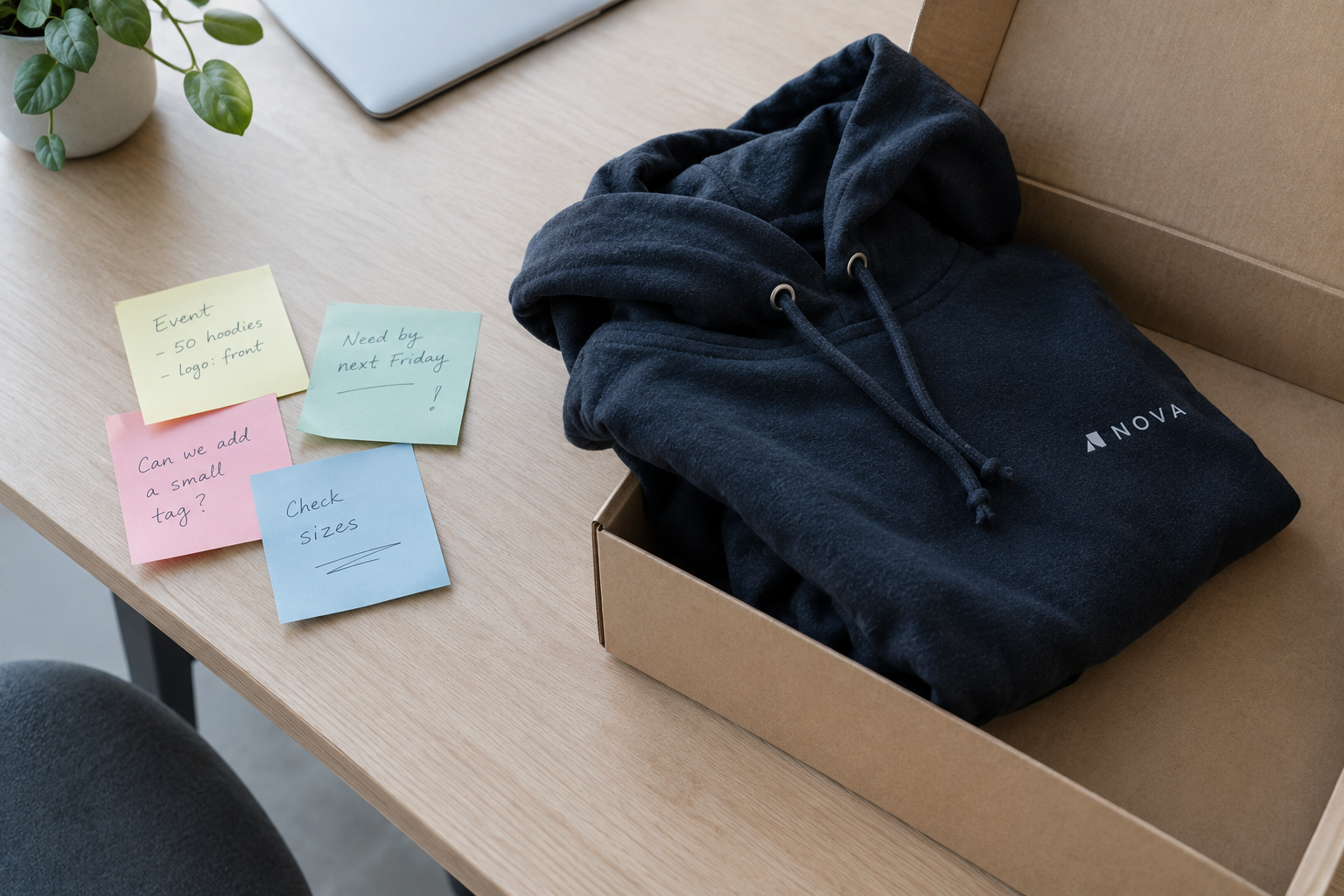
“Hey, quick favour, can you get James a hoodie before his call with the client next week?” If that sentence makes you tired just reading it, you already know how this goes. It lands in your DMs, it sounds small, and somehow it is never actually small. This article looks at why these requests keep landing on one person in marketing, what they are really costing you, and what changes once the process finally gets designed on purpose.
What is the swag request problem?
Every sales and CS team eventually needs something physical: a hoodie for a VIP call, a sample kit for a prospect, a client gift for a renewal. There is rarely a formal way to ask for it. Instead, one person in marketing becomes the unofficial swag desk, fielding requests one Slack message at a time, with no budget line, no approval step and no deadline anyone actually agreed to. It gets treated as a favour rather than a request, which means it never gets the process a request would normally get.
Why it happens
No budget line exists for it. Marketing plans campaigns down to the dollar, but nobody puts a line item down for the hoodie a rep needs next Tuesday. Without a budget line, there is no natural owner, and the request defaults to whoever is easiest to reach.
The ask sounds smaller than the work. “Quick favour” undersells what actually happens next: checking stock, finding the right size or item, arranging shipping, and following up to make sure it arrived on time. None of that shows up on a campaign report, but all of it takes real hours.
Saying no feels like the wrong call. Nobody wants to be the reason a rep loses momentum on a deal over a hoodie. So the answer is almost always yes, even when the timing is unreasonable or the stock situation is unclear, and saying yes every time is what lets the pattern keep going.
The self-serve swag framework
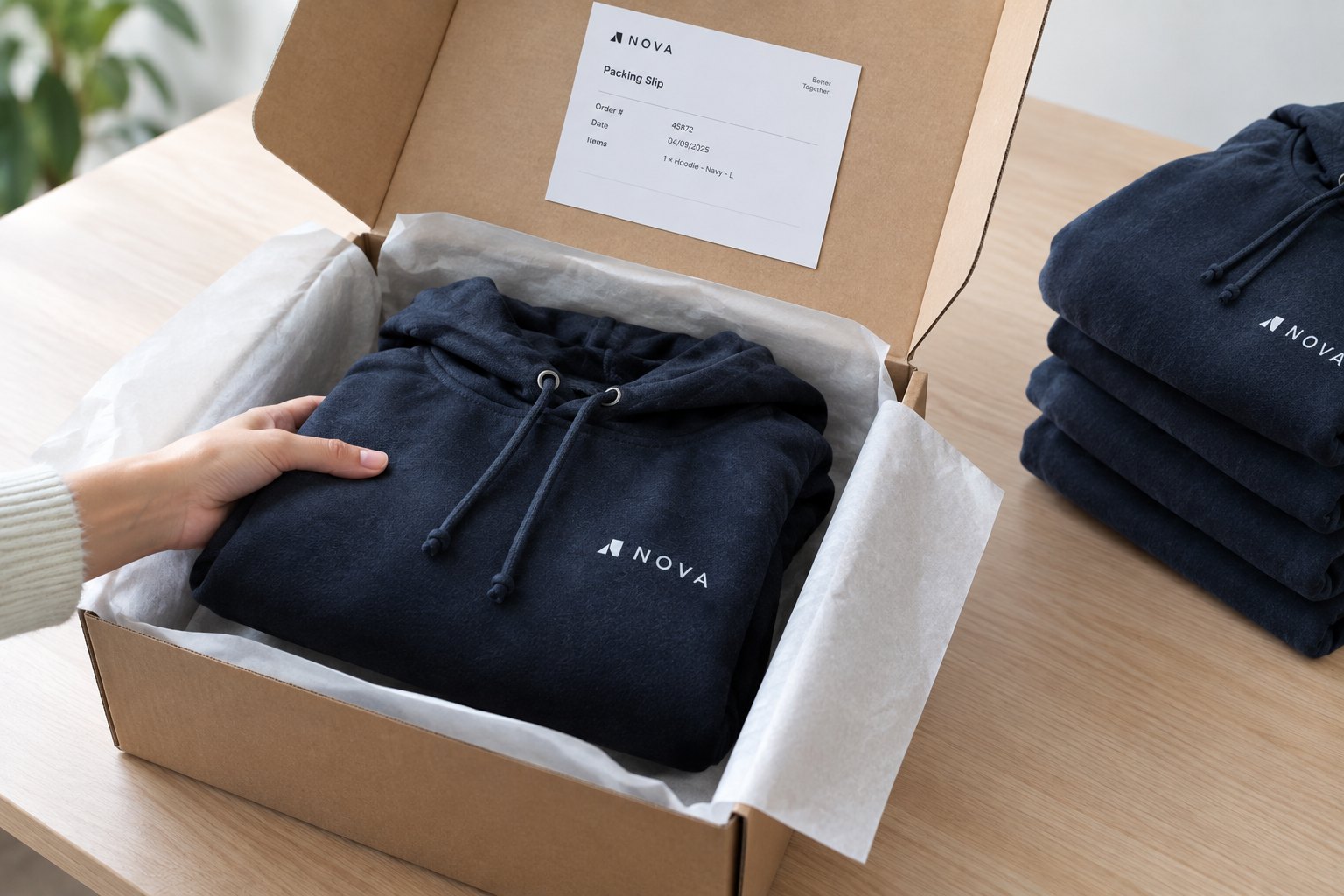
The fix is not about saying no more often, it is about giving reps a way to ask that does not depend on a person. That takes four things: an approved catalogue of what reps can actually order, budget limits and approval rules set once rather than negotiated per request, a direct way for reps to place the order themselves, and one system tracking what has gone out, to whom, and against what budget, working the same way in every market a rep happens to be in.
That's exactly why we built MyMedia OnDemand. It's the control tower for physical marketing: reps get a self-serve catalogue, marketing keeps every budget rule and every bit of visibility, and nothing has to run through anyone's Slack inbox again.
Building in contingency
Even a well-designed system will hit edge cases: a request that falls outside the catalogue, a rep who needs something faster than the standard lead time, a market where local stock is not available. Build a clear escalation path for these from the start, one person who can approve exceptions, and a rule for how fast an exception gets turned around. OnDemand handles this natively, so unusual requests don't quietly turn back into favours.
The practical fix
Two habits make the difference between a system that holds and one that quietly reverts to Slack DMs. Plan backwards from the moment a rep actually needs the item, not from when marketing has time to deal with it. And name a single owner for each stage of the process, from catalogue approval to fulfilment, so requests never default to “whoever answers first”. This is exactly the discipline OnDemand runs at global scale, across our network of ~45 countries with ~99.8% on-time delivery.
Conclusion
The problem was never that reps ask for too much. It is that nobody ever designed a way for them to ask. That's why we built MyMedia OnDemand. Once it's in place, the favours stop landing in anyone's inbox, and marketing gets its time back without losing any control over what goes out or where.
Get in touch at marketing@mymediahq.com to see how OnDemand would work for your team.