New year, new event calendar
How to turn good intentions into a real plan

The turn of the year has that special “blank page” energy. We buy new notebooks, open fresh spreadsheets, make big plans for our events and marketing… and then everyday life kicks in, inboxes explode, and all those good intentions quietly slide to “later”.
The problem usually isn’t a lack of ideas. It’s a lack of structure.
That’s exactly where an intentional New Year event calendar – and a simple planning sheet – can make the difference between “we’ll see what comes up” and a year of well-timed, well-promoted events that actually support your business goals.
In this article, we’ll walk through how to use the New Year momentum to design a realistic, flexible event calendar for the next 12 months, and how to make the most of the Event Calendar Planning Sheet that comes with our latest newsletter.
1. Start with a look back, not a blank page
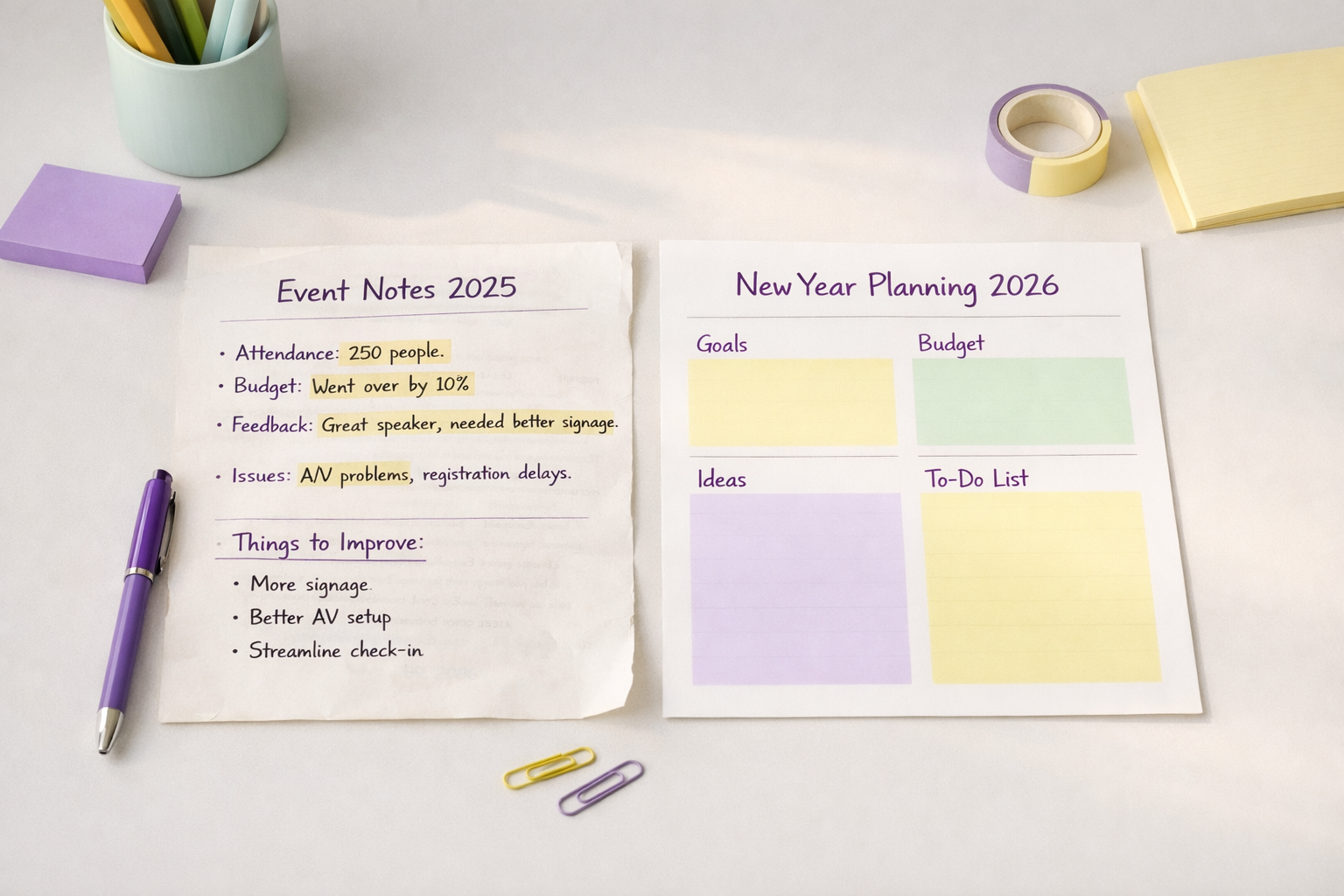
Before you decide what to do next year, spend a moment with last year.
Instead of asking “What should we do?”, ask:
Which events actually moved the needle?
Look at attendance, leads generated, sales, or post-event inquiries.What felt heavy or chaotic?
Late invitations, last-minute suppliers, unclear roles?Where did we see surprising engagement?
A small webinar that kept people talking? A low-budget meetup that created strong relationships?
Turn these reflections into three short lists:
Keep events and formats that clearly worked
Improve things worth repeating, but smoother
Let go activities that cost a lot and returned very little
This way, your New Year calendar isn’t starting from zero. It’s building on what you already know.
2. Choose a theme and a focus for the year
The New Year is a good moment to ask: what role should events play in our bigger strategy this year?
For example, your main focus might be:
Lead generation and sales
Community building and brand awareness
Education and thought leadership
Customer loyalty and retention
Then, consider a loose theme for the year or for each quarter. It could be:
“Back to basics” – simple, highly practical events
“Deep dives” – fewer events, but more in-depth formats
“Connection first” – smaller, more personal gatherings
Having a high-level theme helps you say “yes” or “no” more quickly to opportunities that come up mid-year. If it doesn’t fit the focus, you don’t need to squeeze it in.
You can note this in the top section of your Event Calendar Planning Sheet, so every decision across the year points back to the same direction.
3. Map your year in quarters
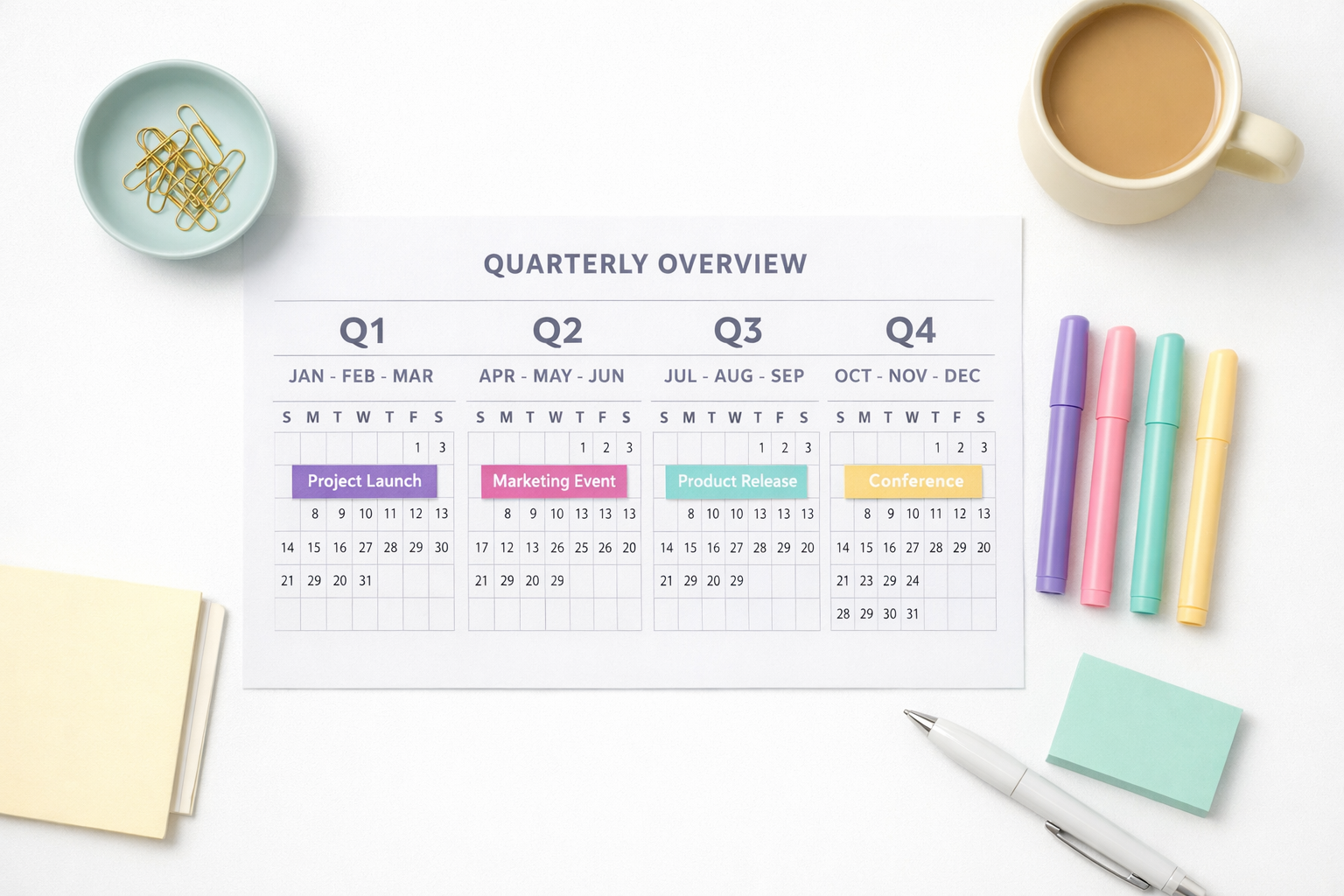
Instead of planning 12 months in one go, break the year into four quarters. This makes things instantly less overwhelming and much more realistic.
On your Event Calendar Planning Sheet, use the quarterly layout to:
Block out key dates first – industry fairs, holidays, internal launches
Decide on 1–3 priority events per quarter (not per month!)
Add supporting activities around them – content, email campaigns, partnerships
Think of it as drawing the big shapes before colouring in the details.
For each quarter, you can ask:
What is the main objective? (e.g. “Generate X qualified leads”)
What is the main signature event supporting it?
What are smaller touchpoints around that event? (webinars, lives, collabs, follow-up calls)
This way, your calendar becomes a story, not a random list of dates.
4. Bring budgets and logistics into the picture early
That early-year momentum can inspire ambitious plans, but the practical questions about budget and who’s handling the plans soon follow.
To avoid frustration in March, integrate budget and logistics right into your planning – not as an afterthought.
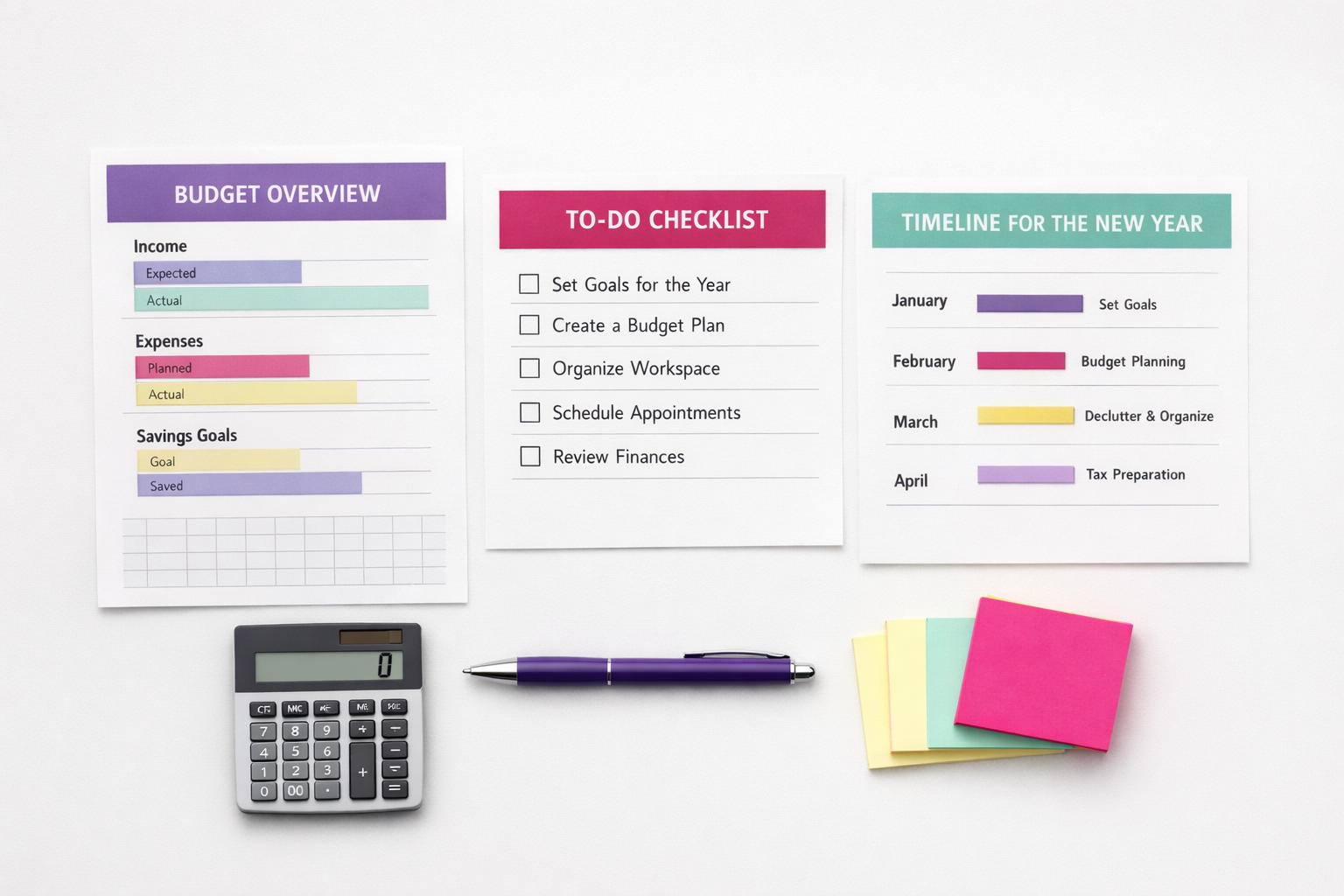
Use the Budget & Logistics Overview section in your sheet to sketch out:
Estimated cost per event
Venue or platform, tech, catering, speakers, promotion.Internal resources
Who is responsible for what? Who is supporting?External partners
Venues, suppliers, agencies, freelancers.
This doesn’t need to be perfect on day one. Even a rough estimate helps you:
See if the year is financially realistic
Decide where to go big, and where to keep it simple
Spot where partnerships or sponsorships might make sense
Budget clarity doesn’t kill creativity, it gives it a clear frame.
5. Turn deadlines and milestones into your safety net
Good intentions fall apart where there are no clear milestones.
In the Deadlines & Milestones section of your planning sheet, outline a simple timeline for each event:
T-8 weeks: confirm date, format, and budget
T-6 weeks: finalize speakers/agenda, confirm venue/platform
T-4 weeks: launch registrations and promotion
T-2 weeks: reminder campaign, tech checks, logistics confirmations
T+1 week: follow-up emails, feedback survey, internal debrief
You can adjust the rhythm depending on your type of event, but the idea is the same:
each date in the calendar has a path leading up to it and a clear follow-through afterwards.
This also makes it easier to delegate and keep everyone aligned. When responsibilities and deadlines are visible, you don’t have to manage everything from memory.
6. Don’t forget the “after”: follow-ups and relationships
A New Year calendar often focuses on “what we’ll do”. But the real value of events usually comes from what happens after.
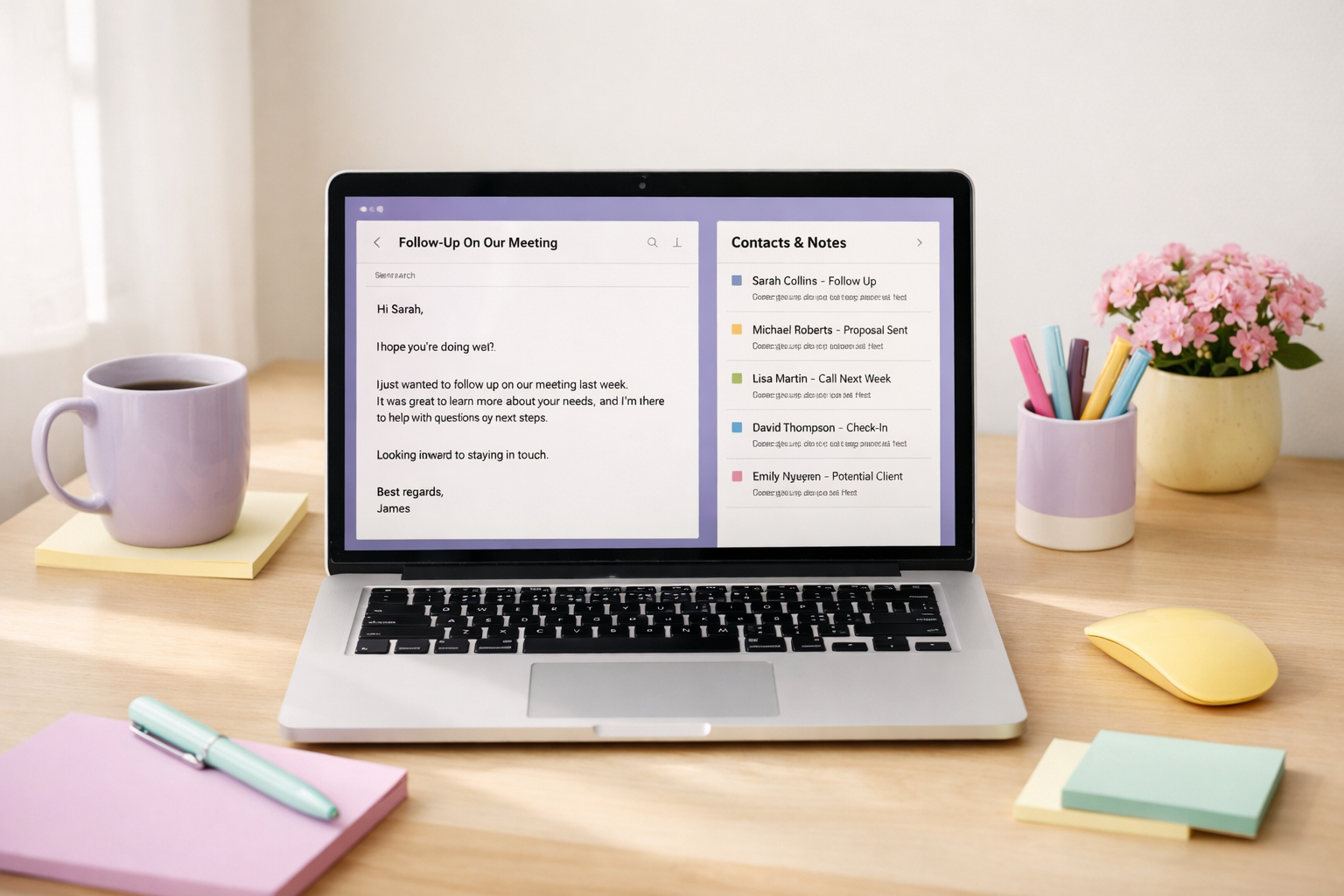
Decide in advance (you can use Follow-up Tracker section of our guide):
What will participants receive after each event?
Slides, replay, summary, special offers, next steps.How will you continue the conversation?
A nurture sequence, a networking follow-up, invitations to future events.How will you track outcomes?
Leads, sales, new partnerships, content created from the event.
Planning this at the beginning of the year means follow-up becomes part of the process, not something you only do when you “have time”.
7. Create intentional space for flexibility
Even with the best planning, life happens: opportunities appear, priorities shift, or something unexpected works incredibly well and deserves more room.
Your Event Calendar Planning Sheet is not meant to lock you in. It’s meant to give you a clear base you can adjust from.
A few ideas to build in flexibility:
Keep 1 “open slot” per quarter, a space reserved for spontaneous opportunities.
Use the notes space for suppliers and venues to build a flexible network you can tap into quickly.
Mark events that are “moveable” vs. “fixed” so you know what can be rearranged if needed.
With a visible structure, it’s much easier to make smart changes without sliding back into chaos.
8. Make this New Year different: plan once, use all year
It’s easy to sit in early January energy and write “Plan more events” on a to-do list.
It’s much more powerful to:
Reflect on what really worked last year
Choose a clear focus and theme
Map the year in manageable quarters
Align budgets, logistics, and responsibilities
Build in follow-ups and flexibility from the start
That’s exactly what the Event Calendar Planning Sheet is designed to support you with: one simple framework you can print, adapt, and reuse every quarter.
If you’re ready to make this New Year the one where your events are not only happening, but strategic, sustainable, and actually enjoyable to run, start by filling in your first quarter today.
One sheet, one afternoon of planning – and your future self (and team) will thank you all year long.